
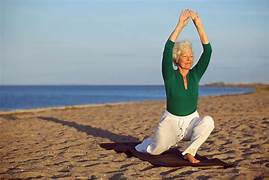
Bad posture makes you look sloppy and leads to aches and pains. Get erect in nine easy steps
Slouching refers to sitting, standing or walking with an awkward drooping posture with your back slightly bent and neck hinged forward. Slouching in a chair and crouching over your desk at a sedentary job leaves you with rounded shoulders and tense muscles. Other than making you look unattractive, not to mention shorter than you are, slouching can cause pains in your back, neck and shoulders. Frequent headaches and tension in the upper body and back are sometimes traced to bad posture.

Here’s how to fix that stoop:
1
How do you look in the mirror?
Examine yourself in the mirror while standing as you normally would. If your palms face your thighs with the thumbs pointing ahead, it means you have a good posture. If your palms face backwards, you could be slouching. To see what your posture is supposed to look like, pull your head back, shoulders down, arms by the sides and feet slightly apart.
2
Strengthen your core
The area under your rib cage to mid-thigh refers to the ‘core’. All the muscles in this area work together to help you sit & stand tall. Yoga, experts say, is the best way to improve core strength because its poses involve controlled movements to hold positions. An easy way to strengthen your core is to lie on your back, lift your legs off the floor & bend your knees as if you were putting your feet flat on a wall. Tuck your abs in & straighten one leg. Keep your back flat and the other knee bent. Bring one leg back, pause, and then extend the other leg; repeat.
3
Examine how to sleep
If you sleep on your side, use a pillow that keeps your spine well aligned by supporting your head. Your neck shouldn’t rest at an awkward angle and your head shouldn’t be higher than your shoulder. When you lie on your side, your top knee tends to drop and twists your back. Placing a pillow between your knees will help to keep your spine aligned. Make sure it’s thick enough so that the knees are spaced 2-3” but less than the width of your hips. Those who sleep on their backs can place a pillow under their knees to open up the joint spaces in the spine. Sleeping on your stomach can strain your neck.
4
Stretch yourself
The stiffness that you feel in your muscles when you are on a long flight or have been vegetating at your desk all day, is due to being in one position for an extended period of time. Simple stretching helps. While standing with feet slightly apart, place hands on the small of the back (fingers pointing downward). Lean back as far as you can and gently bounce 8-10 times. This helps to bring blood flow to the joints and move the spine into its opposite position from sitting. If you are at home, lie on the floor, face down, and raise your body up by straightening your arms but keeping your stomach and hips in contact with the floor (like a push-up but your stomach doesn’t leave the floor). Repeat this up and down motion, within pain-free range, 10-15 times. If you’ve never done this before, you will not likely be able to straighten your arms fully but, with time, this motion gets easier and less uncomfortable to the spine. It is because your body is not used to arching backwards because we’re always bending the spine forwards.
5
Maintain posture at work
When you sit at a computer, your natural reflex will be to lean forward, leaving a strain on your neck. The monitor should be about an arm’s length away from you, with the top of the screen sitting at eye level. This will prevent you from looking up or down, excessively, to see it. Your keyboard tray should be close enough to the edge of the desk so that your arms can work, relaxed, as close to your side as possible. Research suggests that support through the lumbar spine is not enough. You should also ensure that your upper back is well supported by your chair and, if possible, have a upper back support between your shoulder blades which will allow for easier breathing, less fatigue and improved posture.
6
Always sit right
You know you are sitting right if your hips are slightly higher than your knees, your rib cage is not sitting on your stomach, your shoulders are straight, your arms are hanging close to your side, your elbows are bent to 80-90 degrees when you’re working and your head is slightly bent forward with chin up. Make sure you sit all the way back in your chair. This also means making sure that you know how to adjust your chair correctly for your size. Your seat pan should support your legs so that the back of your knees are 2-3 fingers width from the edge of the seat pan. Keep your feet flat and center your weight with your buttocks and pubic bone, creating a triangle. This position will align your body correctly.
7
Learn to be flexible
If you aren’t flexible, it leads to muscle imbalance and bad body alignment. Make sure stretching exercises are included in your exercise routine. Try this stretch to relieve neck and shoulder stress: While standing or sitting, pull your head back, and align it with your spine. Pull your shoulders back and down, moving your arms as if you are trying to put your elbows in your back pocket. Push palms outward and hold for at least six seconds.
8
Keep bags light, heels short
When it comes to carrying backpacks or bags and purses, the trick is to keep them less loaded. Don’t stuff them with unnecessary items and try choosing a cross-body bag to distribute weight more evenly. Limit use of high heels because they throw you forward and put a strain on the lower back. Wedges are your best bet if you must wear heels.
9
Consider your driving posture
Although some of us sit in our cars for less time than others, it is still important to look at how your driving posture might be impacting you. If you get up in the morning feeling rested but sit slumped in your car with your hands forward on the steering wheel, your muscles might already be exhausted from this position before you even get to work. Or if you go to the gym, do exercise classes or get a massage, your body is all nicely stretched out and well positioned, then you get into the car and undo all the good muscle memory that you’ve just achieved. When sitting in the car, we can’t help but fall into the rounded posture of the seat. External mid-back supports can often help improve the comfort of your car as well as your office chairs by supporting between your shoulder blades so that your shoulders can naturally roll backwards.
Final thought: Posture isn’t important…..unless you want to look taller, stronger and slimmer; feel more energetic, alert and productive. These tips may require some extra effort but I guarantee you, in the long run, they will take up much less time than all those doctor, chiropractic and physical therapy visits.
For more information on how to improve your body mechanics and postural alignment, reach out to us at hello@backbonecushion.com. We’re always here to help get your back on track!